
Top Emerging Markets Every Investor Should Watch in 2026

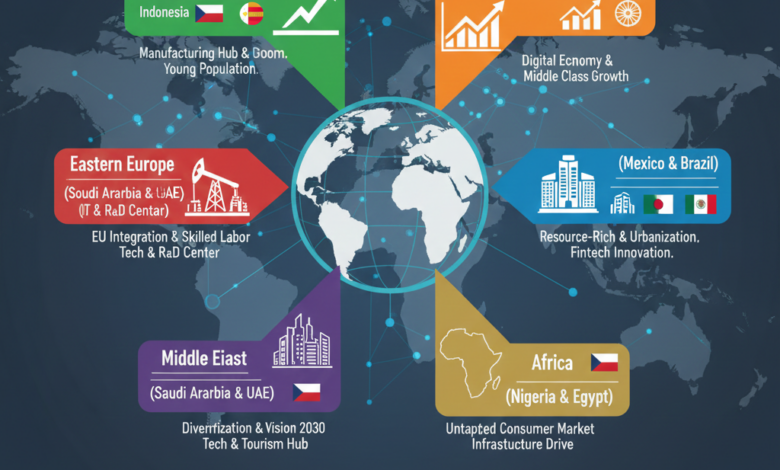
The global economy remains a moving target. Trade fragmentation, technological change, and geopolitical uncertainty continue to reshape growth patterns. Yet amid these challenges, emerging markets offer some of the clearest opportunities for expansion in 2026.
Identifying top emerging markets is not merely a speculative exercise. For investors and policymakers alike, these economies provide insight into where future demand, production, and capital flows are likely to concentrate—often following trajectories distinct from advanced economies.
Understanding Top Emerging Markets
Emerging markets are economies in transition—countries moving from lower-income or developing status toward more industrialized and diversified systems. They are typically characterized by faster economic growth, rising incomes, expanding manufacturing capacity, and accelerating infrastructure development.
These markets carry higher risks, including political volatility, currency fluctuations, and weaker regulatory frameworks. However, their growth potential, expanding middle classes, and improving connectivity make them attractive for long-term diversification. Crucially, their economic cycles often differ from those of developed markets, offering portfolio balance.
1. India: Asia’s Resilient Growth Engine
India continues to consolidate its position as one of the world’s fastest-growing major economies heading into 2026. Growth is increasingly underpinned by domestic demand, demographic advantages, and structural reforms.
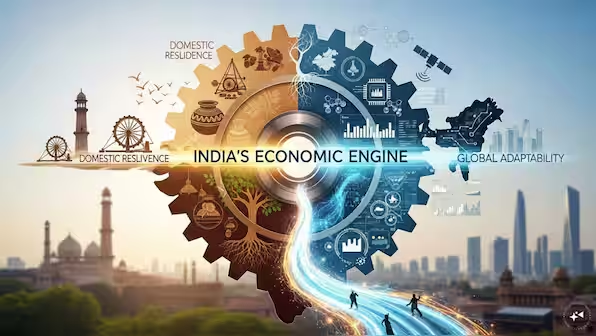
Analysts project India’s GDP growth at 6.4–6.7 percent in fiscal year 2026, supported by robust consumer spending, rising private investment, and sustained momentum in manufacturing. A young labor force and ongoing infrastructure expansion further strengthen its long-term outlook.
2. Vietnam: A Rising Export and Manufacturing Hub
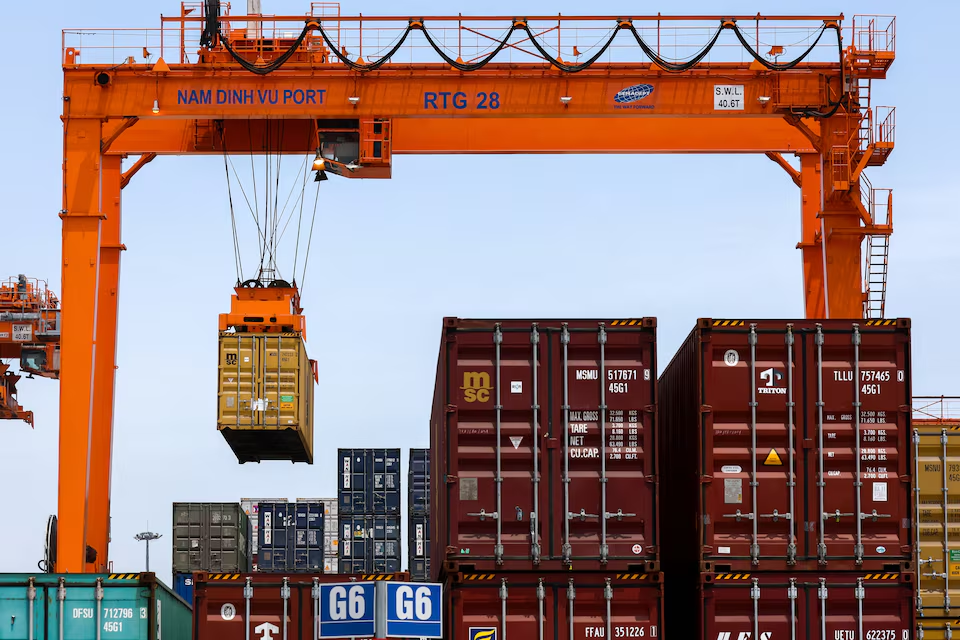
Vietnam has emerged as a key destination for global manufacturing and foreign direct investment. Competitive labor costs, strategic geography, and pro-business reforms have made the country a central player in regional supply chains.
Real GDP growth is expected to range between 6.2 and 8 percent in 2026, driven by export-oriented manufacturing, renewable energy projects, and digital infrastructure investment. Vietnam’s push toward greener supply chains has further enhanced its appeal to multinational firms.
3. Indonesia: Leveraging Scale and Resources
Indonesia remains on a steady growth path, with GDP expansion projected at around 5.4 percent in 2026. Bank Indonesia forecasts growth between 4.9 and 5.7 percent, supported by household consumption and investment activity.
Government initiatives promoting digitalization, artificial intelligence adoption, and downstream processing of mineral resources have strengthened Indonesia’s economic base. As Southeast Asia’s largest economy, Indonesia continues to benefit from scale, domestic demand, and export diversification.

4. Mexico: North America’s Manufacturing Hub
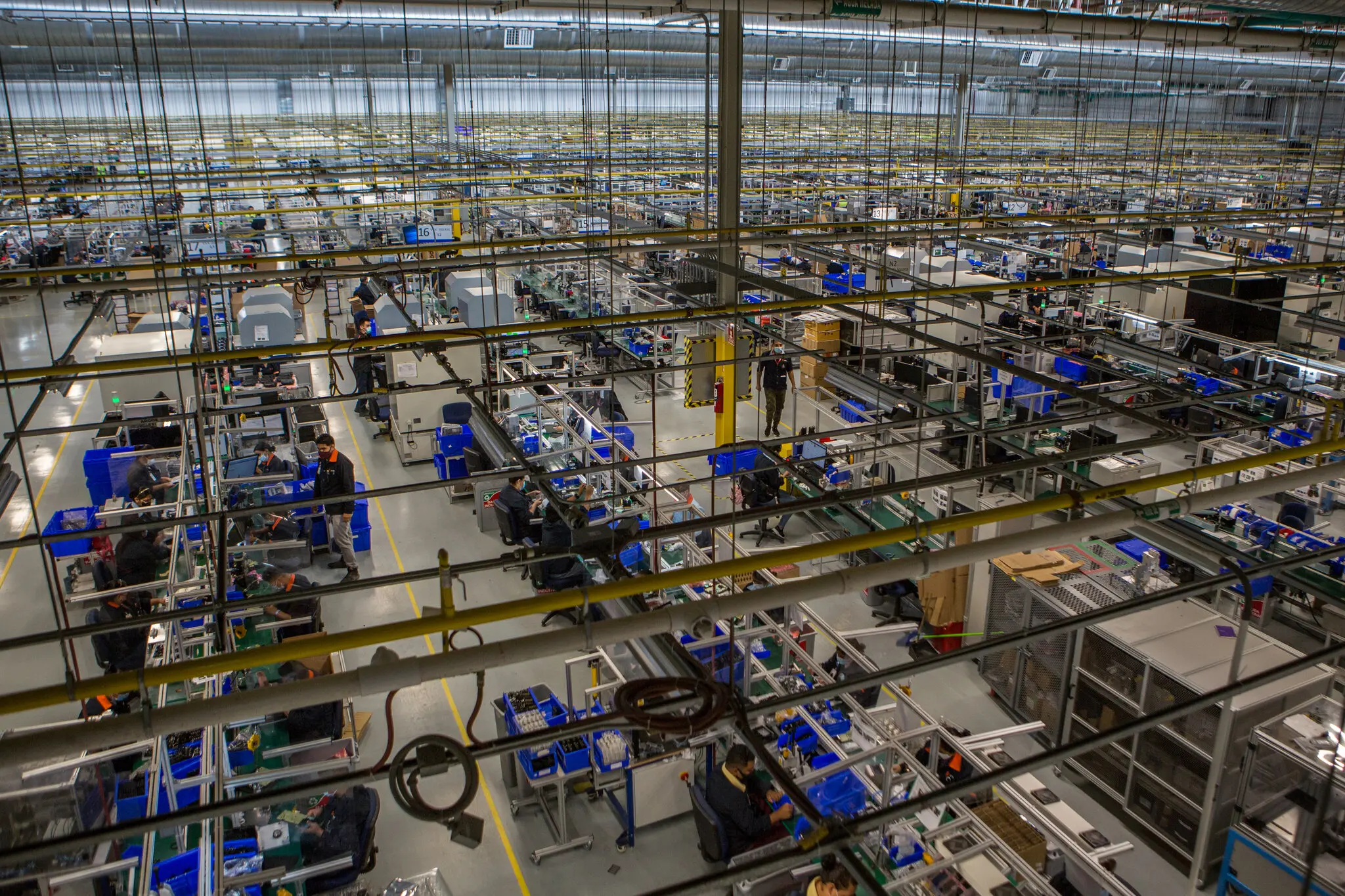
Mexico has positioned itself as a key beneficiary of nearshoring trends in North America, as companies relocate production closer to the United States. GDP growth in 2026 is projected between 1.2 and 1.7 percent, modest but structurally significant.
Proximity to the U.S., trade agreements such as USMCA, and competitive labor costs have boosted investment in automotive manufacturing—including electric vehicles—clean energy, and digital infrastructure. Mexico’s integration into North American supply chains underpins its strategic importance.
Handling Opportunities and Risks in Top Emerging Markets
Emerging markets offer higher growth potential, expanding consumer bases, and diversification benefits. However, they also carry elevated risks, including political instability, exchange-rate volatility, governance concerns, and liquidity constraints.
Successful engagement requires careful market selection, risk management, and a long-term perspective. Investors must weigh growth prospects against institutional strength and macroeconomic resilience.
Conclusion
India, Vietnam, Indonesia, and Mexico stand out as Top Emerging Markets for 2026, each driven by distinct strengths—demographics, manufacturing competitiveness, resource endowments, or supply-chain realignment.
Together, they represent an increasingly important share of global growth, shaped by domestic demand, export integration, and sustained infrastructure development. While risks remain inherent, informed and diversified strategies offer pathways to capture the opportunities these economies present.