The year 2026 marks a powerful new chapter in the global e-commerce landscape. What was once considered merely a convenient alternative to traditional retail has become the central driving force of the modern economy. E-commerce is breaking records due to rapid advancements in technology and changing consumer expectations, further supported by increasing digital infrastructure worldwide. Business entities of all scales—from small local brands to large global corporations—are adapting quickly to win in an increasingly digital marketplace. This article explores the key elements shaping the explosive rise of e-commerce in 2026.
Faster, Smarter, and More Personalized Shopping Experiences
In 2026, the key driver of success is a seamless, personalized experience at every touchpoint. Predictive analytics, powered by AI and machine learning, plays a vital role in product recommendations, information relevance, and personalized storefronts—all triggered by customer behavior. Today’s shopper expects instant results, relevant suggestions, and a frictionless journey from browsing to checkout. Companies that master personalization will see stronger customer loyalty, higher engagement, and significantly better sales performance.
The Rise of Ultra-Fast Delivery and Automated Logistics
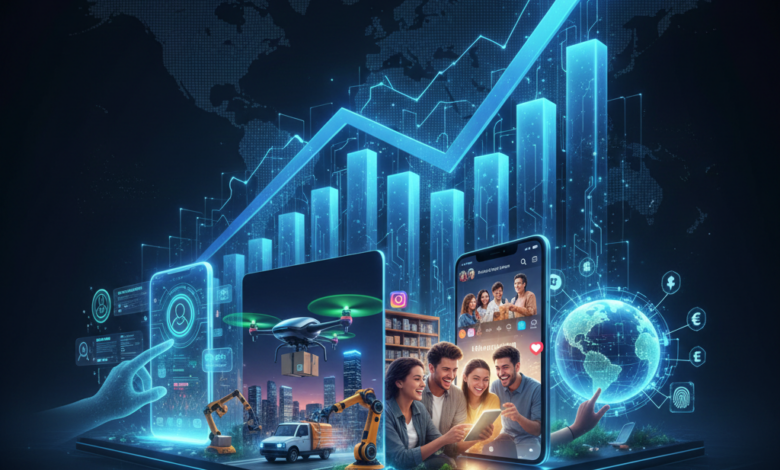
By 2026, expectations for delivery will reach new highs. Same-day and even one-hour delivery are frequently demanded; consumers no longer accept three- to five-day shipping as the standard. Companies have risen to this challenge through investments in automated warehouses, robotics, and AI-driven logistics systems. The use of drone delivery, autonomous vehicles, and smart fulfillment centers is becoming increasingly common, drastically reducing delivery times and costs. This tectonic shift is transforming not only supply chain efficiency but also customer expectations for speed and convenience.
Mobile Commerce Leading the Digital Revolution
M-commerce, or mobile commerce, remains at the top of trending charts with regard to online shopping in the year 2026. Due to improved smartphone technology and expanded internet access, consumers increasingly use their mobile phones for everyday shopping. Built-in payment features, push notifications, and intuitive navigation make mobile applications more appealing than ever. Brands that optimize their platforms specifically for mobile users are seeing faster growth and higher conversion rates.
Social Commerce Will Be a Leading Sales Channel
Social media has become an intrinsic part of e-commerce. In 2026, social commerce—buying directly through apps like Instagram, TikTok, Facebook, or YouTube—is one of the fastest-growing digital sales channels. Influencers, live shopping events, shoppable videos, and community-driven content are dictating purchase decisions. As consumers increasingly act upon recommendations from the creators they follow, social commerce has become a powerful tool for brand visibility and engagement.
Global Expansion of Digital Payment Solutions
The growth of e-commerce goes hand-in-hand with the development of digital payment technologies. In 2026, the standard includes digital wallets, contactless payments, biometric verification, and secure cross-border transactions. These payment options make online shopping faster, more secure, and more accessible, especially in developing regions with limited access to traditional banking. As financial technology continues to evolve, businesses can open new markets and tap into previously underserved customer segments.
Conclusion
Driven by smarter technology, faster logistics, and more connected consumers, the explosive growth of e-commerce in 2026 is reshaping the face of global retail. Companies that embrace these innovative changes—whether through personalization, automation, mobile optimization, or social commerce—will remain competitive in this rapidly changing environment. These shifts signify one thing: e-commerce will continue to push the boundaries of what is possible, unlocking opportunities that will define the future of global commerce.