
Change Your Industry with Sustainable Entrepreneurship

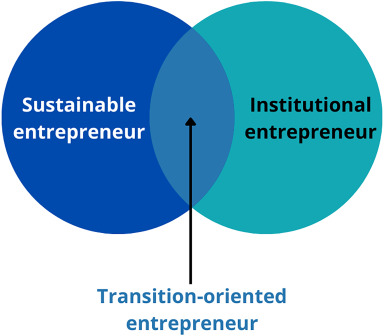
Sustainable entrepreneurship isn’t just a buzzword. It’s a way of running a business that builds new products, processes, and services with one big idea in mind: make money, sure, but also create real, lasting value for the environment and society. With climate change getting worse, plastic piling up, and inequality rising, this kind of thinking isn’t just “nice to have” anymore—it’s how smart companies pull ahead while actually making a difference.
This isn’t business as usual. Instead of chasing profits at any cost, sustainable entrepreneurs shake up old, wasteful systems. Take Fairphone, for example—they build ethical, modular smartphones, showing that you can challenge the status quo and still win. These companies prove: innovation and responsibility don’t have to be at odds.
Why Sustainable Entrepreneurship Matters
Not long ago, people thought “going green” would drag down profits. Now the data says the opposite. Sustainable business practices help companies last longer and actually make more money.
Look at the numbers. Reports from Corporate Knights show that thousands of the world’s most sustainable companies pull in billions each year. They also cut their carbon and waste footprints in a big way. So, sustainability isn’t just a passing phase—it’s a real growth strategy.
Sustainable entrepreneurship delivers a bunch of benefits:
- You save money by using less energy and cutting waste
- Green projects often come with tax breaks and government perks
- Customers start to trust your brand more
- You gain an edge with Millennials and Gen Z, who care a lot about ethics
People today judge companies by their Environmental, Social, and Governance (ESG) record. If you build ESG into your business plan, you’re more likely to win over both investors and loyal customers.
The Tough Parts of Sustainable Business
Of course, none of this is easy.
1. What Does “Sustainable” Really Mean?
It’s tricky. Is installing solar panels enough? Does recyclable packaging solve plastic waste? You need real standards and clear goals to make it count.
2. Upfront Costs
Going green isn’t cheap at the start. It takes real investment, and the payoff comes down the road. You have to play the long game.
3. Measuring What Matters
You need real metrics to track your progress. If you don’t measure your impact, people will just call it greenwashing.
How to Spot Sustainable Business Opportunities
A smart way to find your angle? Look at the United Nations’ 17 Sustainable Development Goals (SDGs). They lay out the world’s biggest challenges—climate change, waste, education, equality, poverty, and more.
If you build your business around solving one of these problems, you’re not only helping society, you’re also building something that scales and makes money.
Put Sustainability at the Heart of Your Business
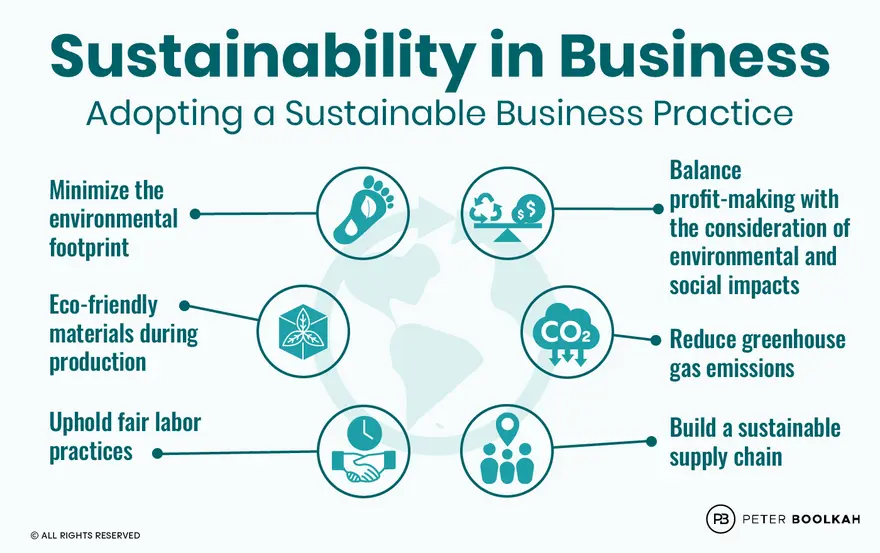
Don’t tack sustainability onto the side of your business. Make it the core. Set real goals:
- Cut carbon emissions by 20% in five years
- Hit zero waste by 2030
- Switch your whole operation to renewable energy
Build these targets right into your supply chain, product design, and company culture. That’s how you build a business that lasts—and shields itself from risk.
Where This Is All Going
The green economy is about to explode. We’re talking trillions of dollars in the next decade. The World Economic Forum says sustainable business models could unlock up to $10 trillion in new opportunities.
But there’s still a gap. Investors push for stronger ESG action, but not every company is moving fast enough.
And the world? It’s not waiting around:
- Hundreds of animal species are vanishing
- We dump 300 million tons of plastic every year
- Most of that plastic never gets recycled
Bottom line: Sustainability isn’t just a choice anymore. It’s a duty—and a smart business move.
Final Thoughts
Sustainable entrepreneurship is the future. The companies that mix profit with real responsibility are the ones that disrupt industries and stick around for the long haul.
Now’s the time to ditch old business models and lead with sustainable innovation. The companies that get this right? They’re the ones everyone else will be chasing tomorrow.