



Trends of the past few years demonstrate that the pace of business is faster than the pace of prediction. Entire industries have transformed in record time and consumer behavior shifted seemingly overnight. Once experimental technologies are now the quiet underpinning of global corporations. As we move further into 2026 the conversation shifts from “what could happen” to “what is happening” and who is agile enough to adapt. This year is defined not by one singular event but by multiple colliding forces. AI is now maturing and scaling alongside real time data analytics, the normalcy of digital commerce, and the transition of sustainability from brand favor to necessity. These are the 10 forces that are genuinely, not as buzzwords, reshaping the world of business in data and behavior driven measurable shifts.
1. Artificial Intelligence Becomes Business Infrastructure
Until recently, companies dabbled with AI technologies. By 2026, they are predicted to be built around these technologies. Global consultants are predicting AI’s contribution to the global economy will be in the trillions by the end of the decade. That’s not wishful thinking. It’s already in motion. AI is handling customer service, writing marketing copy, forecasting stock outages, finding fraud, and screening job applicants. AI in automation is reducing operational costs up to 20-30% and showing positive results with productivity. There’s a significant difference in AI being a department to AI being an integral part of the business. AI is now part of the business like computing and the cloud. Businesses that don’t embrace AI are wasting time and resources.

2. Data-Driven Leadership Replace Instinct-Only Decision Making
Gone are the days when executive gut feelings were highly valued. Certainly, now, and even more so in 2026, experience is invaluable, but it is reinforced — and in some cases, considerably modified — by data. Studies show organizations that are data-driven outperform their competitors in terms of revenue growth and retention of customers. Sales, consumer, marketing ROI and supply chain dashboards are available in real time in a sophisticated and user-friendly manner. What is available is sophisticated and user-friendly. Predictive systems are now commonplace in a data-driven organization, and highly useful in a volatile global economy. Predictive systems are now commonplace in a data-driven organization, and highly useful in a volatile global economy.
3. E-Commerce Evolves From Being One Of The Channels To Being The Norm
Global e-commerce continues to grow and is projected to reach trillions. The behavioral shift in the market is the most interesting. Customers don’t differentiate between ‘shopping online’ and ‘shopping’, period. They find products on social media, research products and reviews on the web, and buy products in a few taps on their smartphone. Streaming services like Amazon, Netflix, and other services like Uber Eats have normalized buying things on the phone. Because of this, the mobile commerce market has grown exponentially. E-businesses that provide a streamlined checkout, quick mobile pages, and clear delivery timelines dominate the market. Simply being online isn’t a competitive advantage any more. The advantage is in a smooth buying process.

4. Remote and Hybrid Work Redefine Global Talent
The workplace has changed forever. Global workforce surveys show that most professionals want hybrid or completely remote jobs. Businesses that provide flexible working options have seen employee retention and ability to hire across global markets increase. For companies, this shift brings new opportunities. Because talent can be recruited and hired anywhere, a startup in one country can work every day with remote designers, engineers, and marketers in other countries. In addition to reducing costs from office space, remote working increases organizational resilience. Businesses designed for remote working will be able to adjust to market changes better than others. In 2026, the greatest advantage will not come from the ability to recruit and hire the best talent, but from the capacity to recruit and hire that talent.
5. Sustainability Shifts from Marketing Strategy to Expectations
Sustainability has evolved from a branding term that was optional to one that now influences consumer decisions. Global consumer research continuously demonstrates that a growing percentage of consumers, especially those in younger generations, favor brands that practice environmental responsibility. For goods that support ethical sourcing and environmentally responsible production, many consumers are willing to pay more.
This change is reflected in investment trends. Globally, environmental, social, and governance (ESG) factors now affect trillions of dollars in capital allocation choices.
Businesses are boosting investor confidence and customer loyalty by incorporating sustainable reporting, ethical supply chains, and renewable energy use.
Sustainability is no longer a differentiator in 2026. Credibility is the key.

6. The Creator Economy Develops into an Organized Sector
The emergence of self-employed digital artists has developed into a significant economic force. According to analysts, the creator economy, which is supported by digital goods, subscription communities, online courses, and brand partnerships, currently generates hundreds of billions of dollars worldwide.
Structured entrepreneurship is the result of what started out as social media influence. People are using platforms that directly connect with audiences around the world to build scalable businesses without the need for traditional gatekeepers.
This change alters marketing tactics for well-established businesses. Because consumers trust individual voices over corporate messaging, collaborations with creators frequently result in higher levels of engagement than traditional advertising.
The distinction between a business entity and an individual brand is becoming increasingly hazy.
7. Automation Lowers Industry Friction
Operational efficiency is steadily relying on automation. Businesses are removing repetitive tasks that previously required a large amount of human resources, such as AI-assisted inventory forecasting and automated payroll systems. Studies conducted in the manufacturing, logistics, and service industries demonstrate quantifiable gains in productivity and decreased error rates following the adoption of automation.
It’s important to remember that automation is not just about saving money. It redirects human attention to areas where emotional intelligence and creativity are still indispensable, such as strategic thinking, innovation, and customer relations.
Harder work is no longer the key to efficiency. It is accomplished by creating more intelligent systems.
8. Customers Expect More from Hyper-Personalization
Today’s consumers demand relevance, not generic marketing.
Targeted advertising, product recommendations, and customized email campaigns all dramatically raise conversion rates and customer lifetime value, according to marketing data.
Businesses can now instantly examine browsing habits, past purchases, and engagement trends thanks to developments in machine learning. Experiences that are highly customized and scaled up are the end result.
Businesses that don’t personalize run the risk of coming across as disjointed. Revenue in competitive markets is driven by relevance.

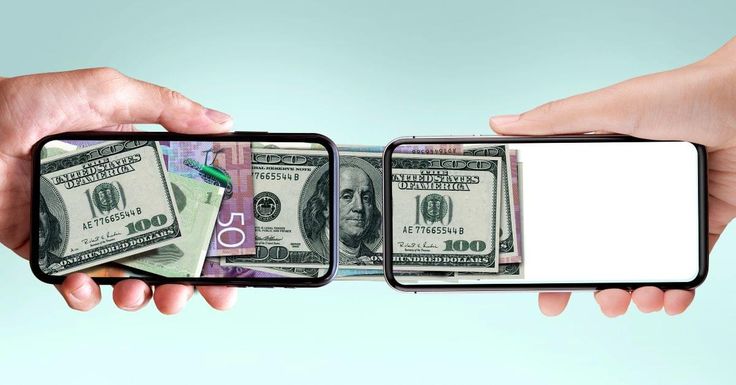
9. Electronic Money Transfers Quicken Growth and Financial Inclusion
The transition to digital payments is happening quickly all over the world. Contactless transactions and mobile wallets are taking the place of cash in many economies.
Innovations in financial technology have made it easier for small businesses to use cloud-based platforms for financial management, international payment processing, and credit access. Mobile banking solutions are being rapidly adopted, especially in emerging markets.
Including flexible payment options helps businesses reach a wider audience and boost conversion rates. Revenue is directly impacted by transaction friction.
Convenience is key in 2026.
10. Entrepreneurship Emerges as a Popular Career Path
The normalization of entrepreneurship is arguably one of the biggest cultural changes.
According to surveys, an increasing number of professionals run side businesses in addition to their regular jobs. Startup barriers have been significantly reduced by digital marketing tools, online marketplaces, and international fulfillment services.
A laptop and strategic execution can now initiate what previously required significant financial resources and physical infrastructure.
This pattern indicates more than just aspiration. It shows a desire for independence, multiple sources of income, and command over one’s career development.
People creating large-scale microbusinesses are driving the decentralization of the global economy.
Conclusion
Disruption is not the only thing that will define business in 2026. It combines accessibility and acceleration.
Operations incorporate artificial intelligence. Decisions are instantly shaped by data. Customers anticipate sustainability and personalization. Talent can be found anywhere. Entrepreneurship is now the norm rather than the exception.
The most successful businesses and people aren’t always the biggest or most well-known. They are the most versatile. The most informed. the most open to change.
Anticipating change has always paid off in business. Those who integrate it will be rewarded in 2026.

