


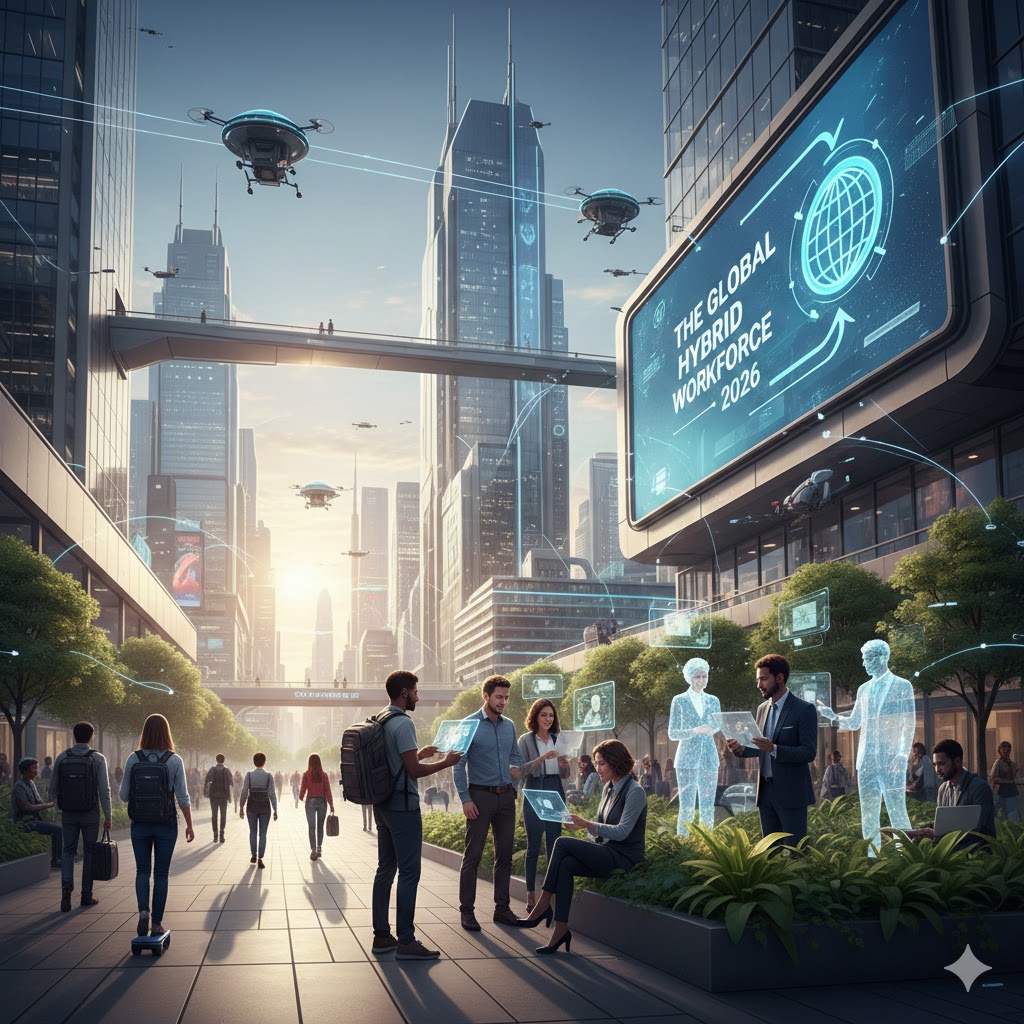
The business world is always changing. But 2026 represents a definitive turning point for how companies operate and acquire talent. The global hybrid workforce is no longer merely a concept; it’s a fully operational blueprint, blending remote work with in-office presence across borders, profoundly shaping organizational operations. This global hybrid workforce business model is critical for any business seeking to grow and remain competitive.
Defining the Global Hybrid Workforce in 2026
What constitutes a “global hybrid workforce” in 2026? It is a reflection of how modern work is conducted. Employees are no longer tied to a single workplace. They operate from headquarters, satellite hubs, co-working spaces, or home—often across countries and time zones. That is the reality.
This model relies on technology. It makes collaboration click, regardless of location. It prioritizes flexibility. Getting things done is more important than clocking hours. It is a smart way to tap into diverse global talent. We are not just doing remote work; it is intentional in-person connection when it makes sense. It is the key.

Key Drivers Fueling the Global Hybrid Workforce Business
A number of factors drive the global hybrid shift. Technology remains a primary catalyst, with advanced collaboration tools, cloud computing, secure network access serving as foundational elements.
Beyond technology, people increasingly demand a better work-life balance and greater autonomy. Companies also recognize the benefit of hiring from a global pool to mitigate local talent gaps. They will get diverse ideas and more innovation. Furthermore, the potential for cost savings on office space becomes a significant incentive for businesses.
Navigating Challenges and Strategic Opportunities
Surely, it is not all like a beautiful rainbow. Rolling out a global hybrid model has several difficulties. Ensuring equitable experiences is tough. Managing legal rules and compliance across regions is a maze. Maintaining a strong company culture remotely and ensuring cybersecurity for distributed teams also remain primary challenges.
But here is the kicker: these challenges are actually opportunities. Many companies have boosted their employer brand by offering flexibility. It cuts turnover and makes employees happier. It optimizes resources, promotes inclusivity, and builds stronger digital systems. That is a competitive edge. A clear plan and open communication are essential.
Building a Thriving Global Hybrid Workforce Business
A successful global hybrid workforce will not exist by accident. It needs an intention. Companies must invest in appropriate technology, and collaboration should be effortless. Clear communication guidelines are essential, as is creating an environment where people feel safe to speak up, which closes many gaps.
Managers also need training. How do they lead a hybrid team effectively? It is about empathy and managing performance remotely. Furthermore, companies must ensure fair compensation that accounts for varying locations. Cybersecurity? It is non-negotiable. These are bedrock principles for sustained growth.
The Evolution: 2026 and Beyond
Looking toward 2026 and beyond, the global hybrid workforce will likely be smarter and more integrated. Artificial Intelligence (AI) will increasingly assist with scheduling, project management, and personalized employee support. Data analytics will be vital for fine-tuning models, identifying productivity trends, and improving employee well-being.
Offices are changing. Companies will design spaces specifically for hybrid teams—places for connection and collaboration during in-person interactions, not just individual workstations. This evolution continues to drive the development of new work structures. It is exciting, right?

Conclusion
The global hybrid workforce is not a passing trend. It is a fundamental shift by 2026. Companies that strategically embrace this model position themselves for resilience, for attracting top talent, and for a serious competitive edge in this constantly shifting global economy.

